









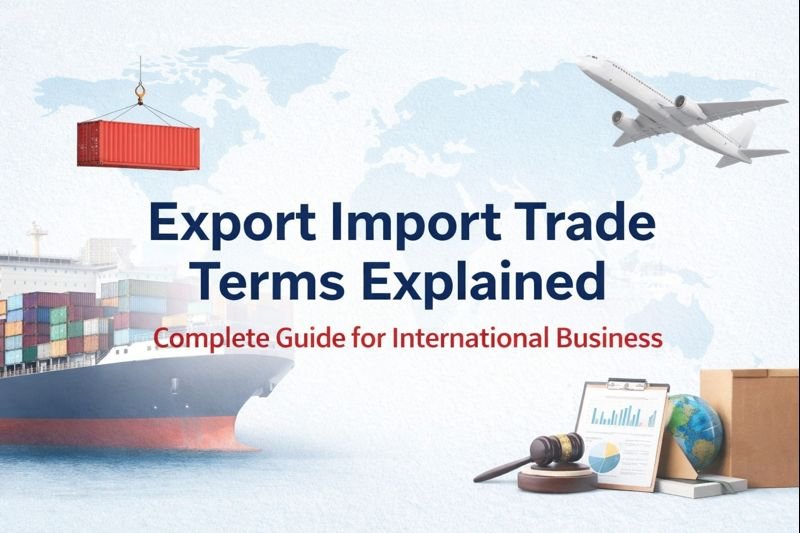
Export Import Trade Terms: A Complete Guide for International Business
In today’s globalized economy, international trade plays a crucial role in business growth. However, success in global markets depends heavily on a clear understanding of export import trade terms. These trade terms define the responsibilities, costs, and risks between buyers and sellers involved in cross-border transactions. Without proper knowledge of trade terms, exporters and importers may face financial losses, shipment delays, and legal disputes.
This article explains export import trade terms in detail, their importance in global trade, and how businesses can use them effectively to ensure smooth international operations.
What Are Export Import Trade Terms?
Export import trade terms are internationally recognized rules that define the obligations of sellers and buyers during the movement of goods from one country to another. These terms are commonly known as Incoterms (International Commercial Terms) and are published by the International Chamber of Commerce (ICC).
Trade terms clarify key aspects such as:
- Who pays for transportation and insurance
- Where the risk transfers from seller to buyer
- Who handles export and import customs clearance
- Who is responsible for loading and unloading goods
By standardizing these responsibilities, export import trade terms eliminate misunderstandings and create transparency in international contracts.
Importance of Export Import Trade Terms in Global Trade
Using the correct trade terms is essential for exporters and importers because they directly impact pricing, risk management, and operational planning. Incorrect or unclear trade terms can lead to disputes, unexpected expenses, or rejected shipping documents.
Some key benefits of using proper export import trade terms include:
- Clear allocation of costs and risks
- Reduced chances of legal conflicts
- Smooth coordination with freight forwarders and customs authorities
- Better compliance with international contracts and letters of credit
For businesses engaged in export-import operations, trade terms are not optional but a critical part of every transaction.
Incoterms 2020: Standard Rules for Export Import Trade
The latest version, Incoterms 2020, is widely used in international trade contracts. These rules apply to different modes of transport, including sea, air, road, and rail.
Below are some commonly used export import trade terms:
EXW – Ex Works
Under EXW, the seller makes goods available at their premises. The buyer bears almost all responsibilities, including loading, transportation, insurance, and customs clearance.
This term is often used when the buyer has strong logistics capabilities.
FOB – Free On Board
FOB is one of the most popular export import trade terms for sea freight. The seller is responsible until the goods are loaded onto the vessel. After that point, the risk transfers to the buyer.
FOB is widely used in bulk and containerized exports.
CIF – Cost, Insurance, and Freight
In CIF, the seller pays for transportation and minimum insurance up to the destination port. However, the risk still transfers to the buyer once the goods are loaded on the vessel.
CIF is preferred by buyers who want cost-inclusive pricing with basic insurance coverage.
CPT and CIP – Carriage Paid To / Carriage and Insurance Paid To
These trade terms apply to all modes of transport. Under CPT, the seller pays for carriage to the agreed destination. Under CIP, the seller also provides insurance coverage.
CIP offers higher insurance protection compared to CIF, making it suitable for high-value shipments.
DAP, DPU, and DDP – Delivered Terms
These are destination-based export import trade terms:
- DAP (Delivered at Place): Seller delivers goods to the destination; buyer handles import duties.
- DPU (Delivered at Place Unloaded): Seller unloads the goods at the destination.
- DDP (Delivered Duty Paid): Seller bears all costs, including customs duties and taxes.
DDP provides maximum convenience for buyers but higher responsibility for sellers.
How Export Import Trade Terms Affect Business Operations
Risk Transfer
Trade terms define the exact point where risk shifts from seller to buyer. Choosing the wrong term can expose businesses to damage or loss during transit.
Cost Control
Export import trade terms determine who pays for freight, insurance, customs duties, and handling charges. This directly affects product pricing and profitability.
Documentation Accuracy
Trade terms must match shipping documents such as:
- Commercial Invoice
- Bill of Lading
- Insurance Certificate
- Letter of Credit
Incorrect trade term usage can cause document discrepancies and shipment delays.
How to Choose the Right Export Import Trade Term
Selecting the right trade term depends on several factors:
- Mode of transport: FOB and CIF are suitable for sea freight, while CPT and CIP work for multimodal shipments.
- Logistics capability: Businesses with strong logistics control may prefer EXW or FOB.
- Market expectations: Some buyers prefer delivered terms like DAP or DDP.
- Insurance requirements: High-value goods may require CIP instead of CIF.
Consulting with freight forwarders and trade experts can help avoid costly mistakes.
Common Mistakes in Export Import Trade Terms
Many exporters and importers make errors such as:
- Using sea-only trade terms for air shipments
- Not specifying the exact delivery location
- Ignoring insurance responsibilities
- Misunderstanding customs clearance obligations
Avoiding these mistakes ensures smoother international transactions.
Conclusion
Export import trade terms are the foundation of international trade. They define responsibilities, manage risks, and control costs between buyers and sellers. Whether you are a new exporter or an experienced importer, understanding and correctly applying trade terms is essential for long-term success.
By mastering export import trade terms and using them accurately in contracts and shipping documents, businesses can reduce disputes, improve efficiency, and build stronger global trade relationships.
For more detailed insights on international trade, logistics, and compliance, explore expert resources available on TradeFrisky.com.
TradeFrisky
Address: Sector 62, Noida, Uttar Pradesh, India
Phone: +91-9876543210
Website: https://tradefrisky.com/


